
What are outdoor totems: modern communication for hotels
{
“@type”: “Article”,
“image”: “https://csuxjmfbwmkxiegfpljm.supabase.co/storage/v1/object/public/blog-images/organization-6586/1768440612169_image_1768440611892.png”,
“author”: {
“url”: “https://wvsignage.sk”,
“name”: “Wvsignage”,
“@type”: “Organization”
},
“@context”: “https://schema.org”,
“headline”: “Čo sú outdoorové totemy: Moderná komunikácia pre hotely”,
“publisher”: {
“url”: “https://wvsignage.sk”,
“name”: “Wvsignage”,
“@type”: “Organization”
},
“inLanguage”: “sk-SK”,
“articleBody”: “Outdoorové totemy zlepšujú hotelovú komunikáciu a navigáciu. Typy, vlastnosti, bezpečnosť, náklady a porovnanie s alternatívami pre manažérov.”,
“description”: “Outdoorové totemy zlepšujú hotelovú komunikáciu a navigáciu. Typy, vlastnosti, bezpečnosť, náklady a porovnanie s alternatívami pre manažérov.”
}
Today, more than 60 percent of hotels in Central Europe use digital devices for external communication. Standing at the entrance and not knowing how to find your way or information can put guests off on their first visit. Modern outdoor totems can not only improve wayfinding, but also reinforce the visual style of the hotel and make up-to-date information available in real time. You’ll discover how the right choice of these technologies affects communication and visitor satisfaction.
Table of Contents
- Definition of outdoor totems and their purpose
- Types of totem poles for the outdoor environment of hotels
- Key features and content management
- Security and legal requirements in Central Europe
- Cost, operation and common errors
- Alternatives to outdoor totems and their comparison
Key points
| Point | Details |
|---|---|
| Resistance of outdoor totems | Outdoor totems are designed to withstand weather conditions, ensuring their reliable performance outdoors. |
| Interactivity and content customisation | Modern totems allow dynamic content management, which increases the efficiency of communication and attractiveness for guests. |
| Diversity of totem types | There are several types of totem poles that vary in level of interactivity and placement, offering hotels customised solutions. |
| Legislative and safety requirements | Hotels must comply with building regulations and privacy requirements to ensure the safe operation of outdoor totem poles. |
Definition of outdoor totems and their purpose
Outdoor totems are modern communication devices designed for outdoor environments that provide a flexible way to present information and navigate. Specific technical outdoor presentation devices enable hotels to communicate effectively with their visitors through visually appealing and durable displays.
Designed for outdoor environments, these devices combine rugged construction with special imaging technologies. The main characteristics of outdoor totems include:
- Resistance to weather conditions
- High brightness for daylight readability
- Double-sided display of information
- Modular design allowing quick change of contents
The original purpose of outdoor totems is to provide quick and clear communication in high-traffic areas. Modern outdoor communication devices allow hotels to present up-to-date information, navigation instructions, promotional offers and interactive content.
In the context of hotels, outdoor totems serve several strategic purposes: navigating guests, providing accommodation information, showcasing special offers and increasing overall communication effectiveness. Their use significantly improves the first impression and orientation of visitors in the space.
Expert advice: When choosing an outdoor totem for your hotel, pay attention to its weatherproofing, display readability and remote content management capabilities.

Types of totem poles for the outdoor environment of hotels
Outdoor totems for hotels represent a complex communication system that offers various technological solutions for the effective presentation of information. Light totems with digital images provide hotels with a flexible platform for dynamic communication with guests.
The basic types of totems for hotel environments include:
- One-sided totems
- Suitable for tighter spaces
- Compact design
- Easy installation
- Reversible totems
- Larger information area
- Efficient for spacious entrance halls
- Option to view more content
- Interactive digital kiosks
- Allow direct interaction with guests
- Provide comprehensive information services
- The modern way of communication
Hotels can combine LED lighting with totem systems to achieve excellent visibility and aesthetic appeal. These technologies are designed to operate reliably in a variety of weather conditions, while ensuring continuous communication with visitors.
A key advantage of modern totems is their ability to adapt to the specific needs of each hotel facility. Whether it’s a luxury resort or a smaller boutique hotel, there is a suitable totem type that can effectively communicate and navigate guests.
For better orientation, here is a comparison of the main types of outdoor information totems for hotels:
| Type of totem | Level of interactivity | Ideal location | Added value for the hotel |
|---|---|---|---|
| One-sided totem | Low | Corridors, narrow spaces | Quick guest orientation |
| Reversible totem | Medium | Spacious lobbies | Sharing of multiple contents |
| Interactive digital kiosk | High | Lobby, main entrance | Personal information for guest |
Expert advice: When choosing totems for your hotel, consider not only their technical parameters, but also their overall design, which must correspond with the architecture and style of your hotel facility.
Key features and content management
Managing the content of outdoor totems in a hotel environment is a complex system that requires strategic planning and technological expertise. Effective content management is the key to successful guest communication.
Key features of modern totems include:
- Dynamic content management
- Instant change of information
- Flexibility to display different media types
- Synchronisation with the hotel’s internal systems
- Interactive elements
- Touch screens
- Personalised information services
- Direct connection to reception
- Safety mechanisms
- Protection against abuse
- Encrypted data transmission
- Remote management and monitoring
Hotels can use these totems to provide comprehensive information services, from basic navigation to specific marketing offers. Content can be segmented into three main categories: informational (operational information), advertising (service promotion) and interactive (direct communication with the guest).
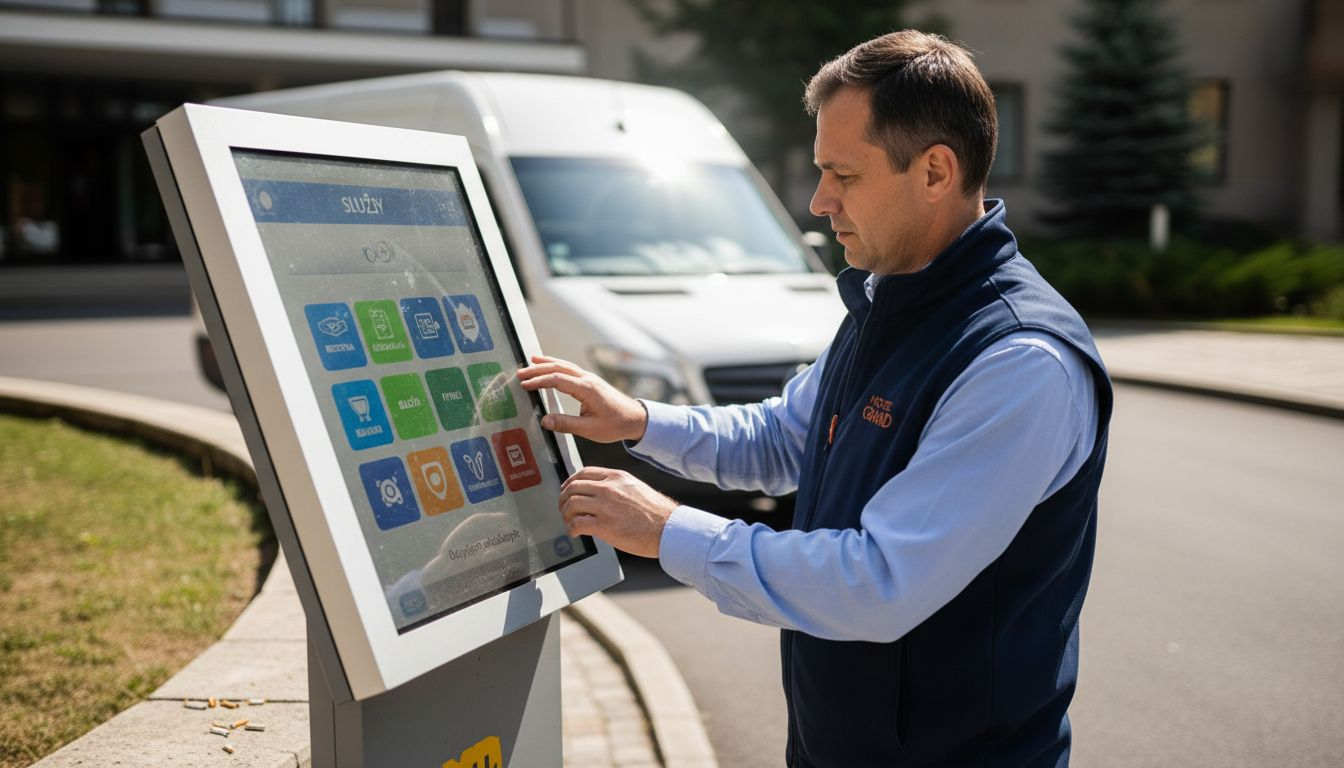
Modern technology allows dynamic content management, where hotels can change the information displayed according to the current situation, season or specific events. This flexibility increases the overall communication effectiveness and attractiveness of hotel spaces.
Expert advice: When implementing totems, focus on the simplicity of the user interface and regularly update the graphic design for maximum appeal.
Security and legal requirements in Central Europe
The legislative requirements for outdoor totems in the Central European hotel sector represent a comprehensive set of regulations aimed at safety and compliance. The legal standards for advertising devices are extremely important for the proper implementation and operation of these means of communication.
Key legislative areas include:
- Building regulations
- Permits for the placement of totem poles
- Compliance with urban planning standards
- Compliance with distance limits
- Privacy Policy
- GDPR compliance
- Ensuring privacy with digital displays
- Transparency of information display
- Technical safety standards
- Electrical safety equipment
- Resistance to weather conditions
- Mechanical stability of the structure
Security requirements in the hotel sector place emphasis on comprehensive protection of guests and employees. Hotels must ensure that their outdoor totems meet not only technical, but also environmental and safety criteria.
When implementing totem poles, it is essential to consult local building authorities, comply with relevant technical standards and carry out regular safety inspections. Each region in Central Europe has its own specific requirements, so it is crucial to have a local legal advisor who is familiar with the specifics.
Expert advice: Before installing an outdoor totem, always check all necessary permits in advance and have a technical safety report drawn up.
Cost, operation and common errors
The operating costs of outdoor totem poles in hotels represent a complex financial investment that requires strategic planning. Energy and maintenance costs are a key factor in the decision to implement these communication devices.
The main operating costs include:
- Energy consumption
- Electricity for displays
- Power consumption of LED technology
- Equipment cooling/heating costs
- Technical maintenance
- Regular service checks
- Replacement of components
- Software update
- Personnel costs
- Operator training
- Time required for content management
- Technical support
Rising hotel operating costs significantly affect the overall economics of the operation. Hotels need to account for ongoing investments in technology that can deliver long-term savings and increased communication efficiency.
The following table provides an overview of typical groups of operating costs for outdoor totems and their impact on hotel operations:
| Cargo type | Example of expenditure | Effect on hotel finances |
|---|---|---|
| Energy | Electricity consumption of displays | Increases regular monthly expenditure |
| Maintenance | Service, replacement of components | Requires budget planning |
| Staff | Content management training | Affects time efficiency |
The most common mistakes in totem operation include lack of regular maintenance, outdated content, poor display brightness settings, and lack of systematic software updates. These deficiencies can significantly reduce the overall efficiency of the communication system and increase subsequent repair costs.
Expert advice: Establish a precise maintenance schedule and regularly analyze the cost-effectiveness of the operation of outdoor totem poles in order to detect any operational deficiencies in time.
Alternatives to outdoor totems and their comparison
Communication solutions for hotels offer diverse alternatives to traditional outdoor totems. Different forms of outdoor communication provide hotels with flexible options for presenting information and advertising.
The main alternative means of communication include:
- Digital billboards
- Larger display area
- Lower procurement costs
- More static format
- Mobile advertising panels
- Easy repositionability
- Lower investment
- Less technological complexity
- Facade LED displays
- Direct integration into the building
- A more aesthetic solution
- Better visibility from a distance
A comparison of the means of communication in the hotel sector shows that the choice depends on the specific operational requirements of each hotel. While outdoor totems offer high interactivity, alternative solutions can be more cost-effective.
Each alternative has its advantages and disadvantages. Digital billboards are cheaper but less flexible. Mobile billboards allow easy repositioning but have lower visibility. Façade displays are elegant but require intervention in the architecture of the building.
Expert advice: Always consider not only the price, but also the overall strategic value for your hotel when choosing a means of communication.
Modern customized outdoor totem solutions for your hotel
If you’re looking for an effective way to improve guest communication and solve the challenges of outdoor display durability and content management, WVsignage’s digital signage solutions are exactly what you need. The outdoor totems in our range combine robust construction, high legibility and a wide range of content personalisation options to accurately reflect the modern hotel’s requirements for flexible and secure communications.
Don’t wait for your information to get lost in the crowd and let your services stand out through interactive and resilient devices. Try our range of hardware, including digital kiosks and totems, and seamless content management that allows you to dynamically change menus and navigation information to suit your current needs. Contact us today to discover how smart outdoor communications can transform your guests’ first impression and increase their satisfaction.
Frequently Asked Questions
What are the benefits of outdoor totems for hotels?
Outdoor totems provide flexible presentation of information, efficient navigation and attractive design that enhances overall guest communication.
How to ensure proper maintenance of outdoor totems?
It is important to regularly check equipment, update content and ensure that technical components are in good condition to prevent breakdowns and increase repair costs.
Which types of outdoor totems are best suited for a hotel environment?
The most suitable types include single-sided totems for narrower spaces, double-sided totems for more spacious halls, and interactive digital kiosks that allow direct interaction with guests.
What are the key legislative requirements when installing outdoor totem poles?
Key requirements include building regulations, data protection and compliance with technical security standards to ensure that the necessary permits are obtained and guests are protected.
Recommendation
-
- Archives One-sided totem – WVsignage s.r.o.
- Archives Exterior – WVsignage s.r.o.
- Archives Reversible totem – WVsignage s.r.o.
- Archives One-sided totem – WVsignage s.r.o.