
The importance of interactive screens in healthcare
Did you know that up to 65 percent of patients remember information presented on interactive screens better than traditional communication? Modern technology is changing the way healthcare facilities inform and educate their patients. Interactive screens bring clarity, reduce stress and help patients gain a deeper understanding of their own health.
Table of Contents
What are interactive screens in healthcare
Types of interactive screens and their uses
Benefits for patients, staff and facility operations
Implementation process and common challenges
Comparison with traditional information tools
Key Knowledge
| Increasing patient engagement | Interactive screens improve patients’ active involvement in the treatment process. |
| Reduction of stress and anxiety | The use of multimedia tools reduces the stress associated with medical procedures. |
| Optimising communication | Interactive screens transform the communication flows of healthcare facilities and improve the organisation of processes. |
| Dynamic content | Unlike traditional tools, interactive screens offer dynamic and personalized content for patients. |
What are interactive screens in healthcare
Interactive screens are revolutionary digital devices that are transforming communication and education in healthcare environments. According to research from Vanderbilt University, these cutting-edge technological tools allow patients and healthcare professionals direct access to important information and educational materials.
These advanced screens offer several key features for healthcare facilities:
- Interactive teaching programmes for patients
- Visualisations of medical processes and treatments
- Animations to better understand health conditions
- Quick access to health information
Research findings suggest that interactive screens significantly improve patients’ engagement in their own treatment process. Digital signage technologies enable patients to take a more active role in their health through engaging and easy-to-understand multimedia tools. These interactive solutions not only educate, but also reduce the stress and anxiety associated with unfamiliar medical procedures.
Types of interactive screens and their use
According to research from Vanderbilt University, there are several key types of interactive screens used in healthcare settings. These technological devices are designed to streamline communication, education, and support therapeutic activities for patients.
The main types of interactive screens in healthcare include:
- Touch panels: allow direct interactive access to health information
- Interactive whiteboards: used to educate staff and patients
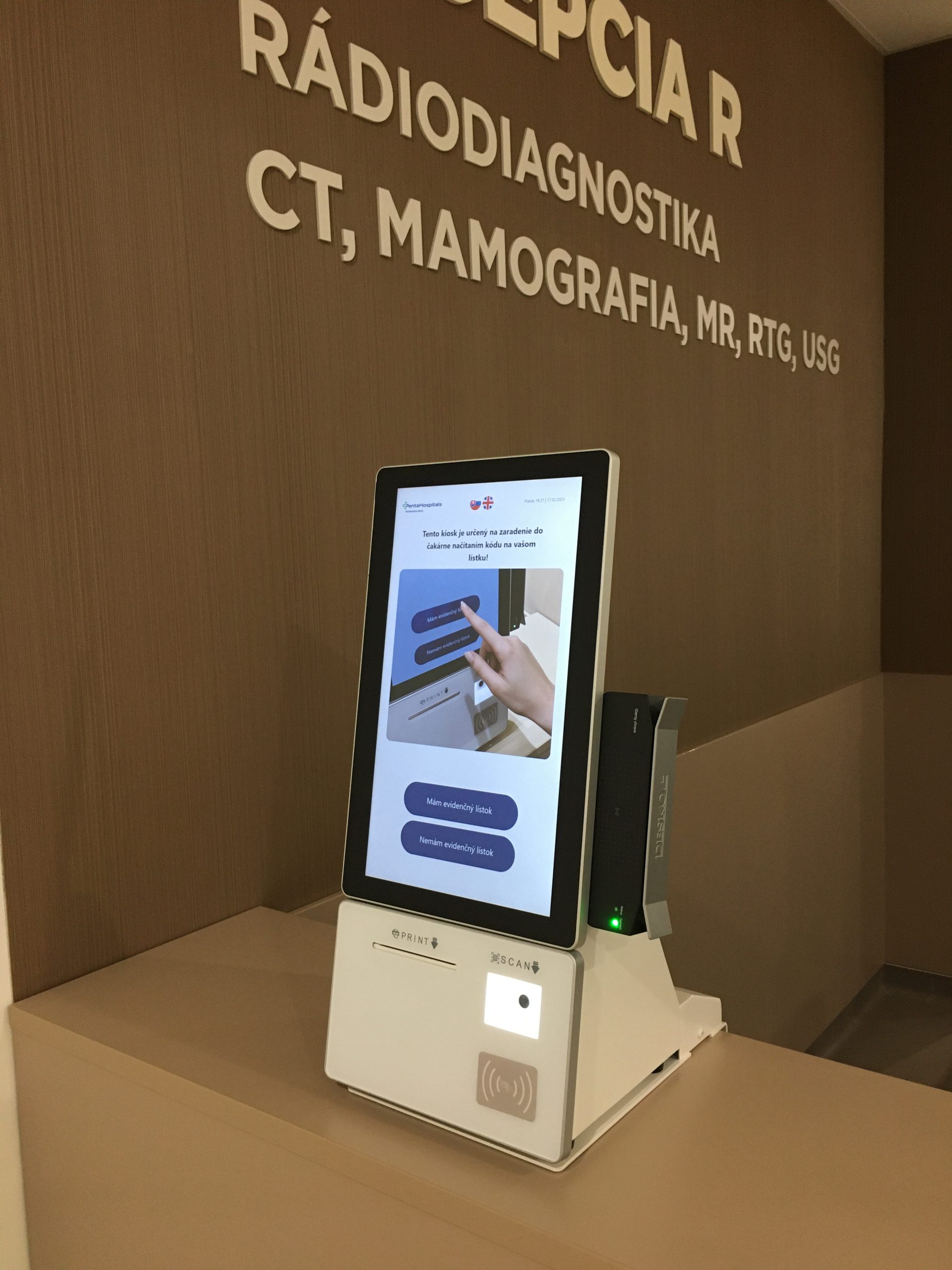
- Registration kiosks: provide comprehensive information and registration services
- Large-screen digital displays: show important health information and navigation systems
These devices are revolutionising the way healthcare communicates. They allow patients to take a more active role in their own treatment through interactive educational programmes, visualisations and animations. Their aim is not only to provide information, but also to reduce patients’ stress and anxiety by offering them understandable and engaging multimedia content.

Benefits for patients, staff and facility operations
According to research from Vanderbilt University, interactive screens bring significant benefits to all stakeholders in a healthcare facility. These technology tools are fundamentally transforming communication and operational processes, creating a more comprehensive and efficient healthcare ecosystem.
For patients, interactive screens present key benefits:
– Better understanding of one’s own health
– Reduced anxiety and stress about unfamiliar medical procedures
– More active involvement in the healing process
– Easier access to important health information
For medical staff and facility operations, these large digital displays bring even more benefits. They optimize communication flows, reduce the risk of communication errors and enable more efficient organization of work processes. Their implementation leads to an overall increase in the quality of healthcare delivery and an improvement in the organisational performance of the healthcare facility.
Implementation process and most common challenges
According to research from Vanderbilt University, implementing interactive displays is a complex process that requires strategic planning and thorough preparation. Healthcare facilities must carefully consider the technical, organizational, and human aspects of this technological transformation.
Key implementation steps include:
– Analysis of existing infrastructure and IT systems
– Selection of appropriate technology solutions
– Ensuring compatibility with electronic health records
– Design of a training programme for staff
– Phased implementation
The most common challenges in implementing large digital displays in healthcare are technical complications, initial staff resistance to change, and the need for continuing education. Successful implementation requires not only technological readiness, but also active management support and a patient approach to adapting new workflows.

Comparison with traditional information tools
According to research from Vanderbilt University, interactive screens bring a fundamental shift from traditional health information tools. While older methods of communication were static and one-sided, interactive technologies create a more dynamic and engaging way to transmit information.
Key differences between traditional and modern information tools include:
Here is a comparison of the key differences between traditional and interactive health information tools:
| Feature | Traditional tools | Interactive screens |
| Content type | Static Text |
Dynamic Multimedia |
| Personalisation | Uniform information | Personalised content |
| Feedback | One-way communication | Immediate response |
| Visualisation | Simple images Text |
Animations Visualizations |
| Patient involvement | Low level | High level |
- Dynamicity vs. static content
- Personalisation vs. uniformity of information
- Immediate feedback vs. one-sided communication
- Visually richer content vs. text-based materials
- Higher levels of patient involvement
Interactive information kiosks allow patients to take a more active role in their own education and communication. Unlike traditional paper brochures or static posters, they offer a multimedia experience that promotes better understanding and retention of health information.
Transform communication in your healthcare facility today
Are you missing an effective way to engage patients in treatment and alleviate their fears about unfamiliar procedures? The article clearly shows that traditional information boards often fail to meet the needs of modern healthcare. It is interactive screens and information kiosks that provide a solution that combines clarity, engagement and instant feedback.

Improve patient care and make your staff’s job easier with advanced technology from WVsignage. We offer a complete portfolio of advanced hardware and software for content management and display, including large-screen digital displays designed specifically for the healthcare environment. Join the innovative facilities that are already using digital signage for greater patient satisfaction and more effective communication.
Frequently Asked Questions
What are the main benefits of interactive screens in healthcare?
Interactive screens improve patients’ understanding of their condition, reduce stress and anxiety, and enable more active involvement in the treatment process.
How do interactive screens differ from traditional information tools?
Interactive screens offer dynamic, multimedia content and instant feedback, whereas traditional tools are static and one-sided.
What types of interactive screens are available in healthcare settings?
Types include touchpanels, interactive whiteboards, multimedia kiosks and large digital displays that are used to educate and provide important information.
What is the process of implementing interactive screens in healthcare?
Implementation requires analysis of the existing infrastructure, selection of technology solutions, design of a training programme for staff and phased implementation.

