
Why change from print to digital: the complete guide
Did you know that digital menus can reduce annual printing costs by up to €840 per operation? More and more restaurants and cafés are changing the way they present their offer. The differences between digital and printed menus have an impact on update speed, cost savings and ecology. This overview will reveal why technology is changing the rules of the game in the world of foodservice.
Key Knowledge
Point |
Details |
| Switching to digital currency reduces costs | Implementing digital menus can save up to €840 per year in printing costs for a single operation. |
| Instant updates and synchronisation | Digital menus allow for quick and efficient menu updates, reducing errors and optimizing the ordering process. |
| Flexibility and customisation | Digital menus are able to adapt to different sector needs, increasing efficiency and customer satisfaction. |
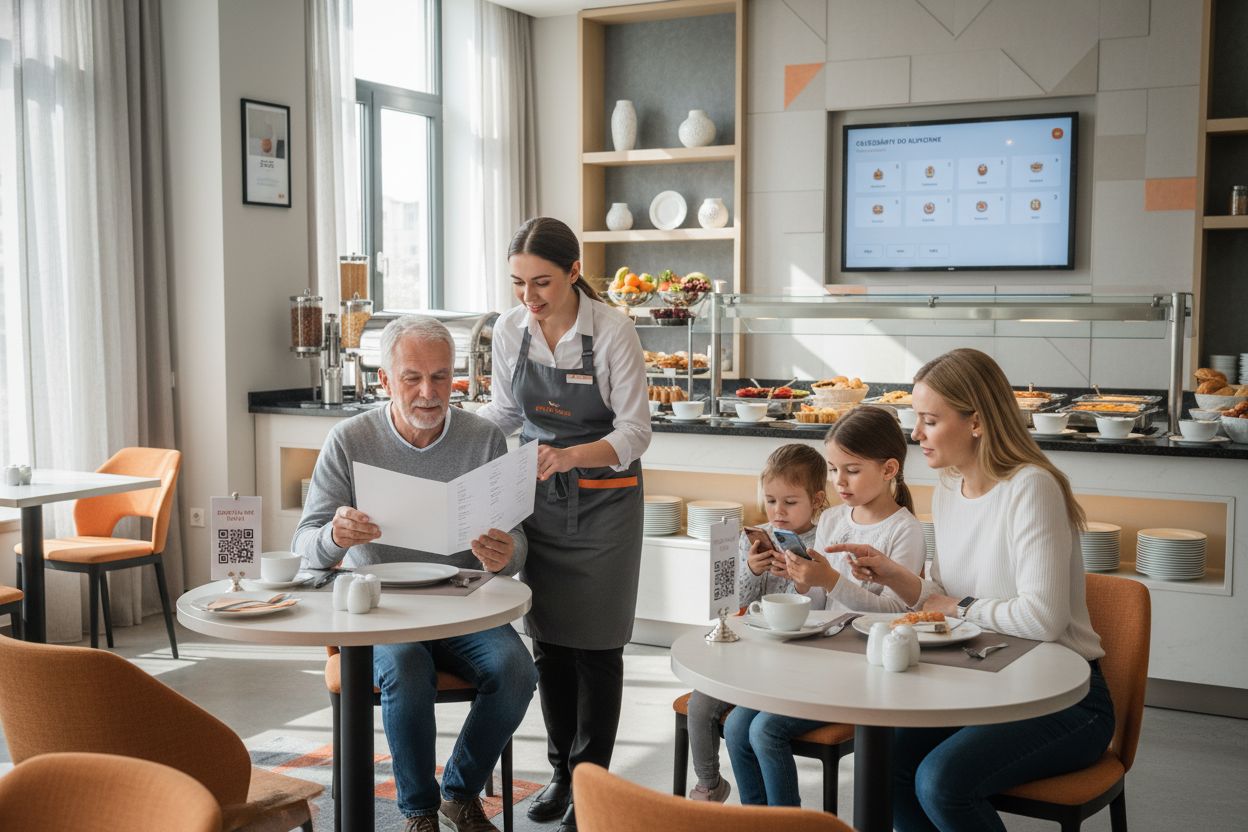
| Risks and errors in implementation | It is important to avoid design flaws and to take into account the Hybrid approach to satisfy even less technically savvy customers. |
Table of Contents
- Digital menus and printed menus: basic differences
- Advantages of digital menus for different sectors
- The process of switching from printed to digital menus
- Costs, savings and return on investment
- Mistakes when digitising menus and how to avoid them
Digital menus and printed menus: basic differences
The world of foodservice is undergoing a major digital transformation, with digital menus providing a modern alternative to traditional printed documents. While printed menus have been the standard for many years, digital solutions are revolutionising the way restaurants and cafés present their offerings.
The main differences between digital and printed menus are marked. Our digital solutions allow for immediate menu changes without the additional cost of printing. Digital menus are able to easily update the menu, which brings several key benefits:
– Instantly update menus
– Eliminate reprint costs
– Dynamically present special offers
– Reduce waste from printed materials
 In addition, digital menuboards linked to online systems enable automatic synchronization of information across multiple screens. This means that all information is always up-to-date and consistent, saving staff time while providing customers with the latest information, including allergens and nutritional values.
Here is a comparison of the basic differences between digital and printed menus:
Feature |
Digital menu |
Printed menu |
| Updating the offer | Instant | Slow, manual |
| Maintenance costs | Low | High (recurrent) |
| Presentation of specials | Dynamic customizable |
Fixed limited |
| Waste | Minimum | Significant paper waste |
| Data synchronisation | Automatic multiple platforms |
Physical version only |
| Access to information | Current integrated allergens |
Limited often out of date |
Advantages of digital menus for different sectors
Digital currencies are not just a technological trend, but a strategic tool for various sectors that brings significant operational and economic benefits. Each sector has its own specific needs, and it is digital solutions that offer unexpectedly flexible possibilities for adaptation.
For restaurants and hotels, digital menus are an extremely efficient solution. According to available studies, digital menus can significantly reduce average annual printing costs from €1,200 to €360, saving up to €840 per year per establishment. In addition, by adding self-service ordering features, establishments can generate additional revenue of up to €18,000 per year.
Key benefits of digital menus include:
– Automatic update of the offer
– Integration with POS systems
– Reduction of ordering errors
– Immediate change of language versions
Digital menus bring significant improvements in operational efficiency. For example, multilingual versions increase the number of orders from international customers and integrated allergen filters reduce order error rates by up to 45%. The system also hides unavailable menu items, minimizing confusion in the kitchen and speeding up the entire ordering process.
Personalisation and interactivity
Digital menu boards allow you to create highly personalised experiences. The systems can tailor content to the time of day, the current weather, the current offer or even the individual preferences of a specific customer. According to a study published in the Journal of Marketing Research, this approach increases customer interest and engagement by up to 65%.
The process of switching from printed to digital menus
Switching from a traditional printed menu to a digital solution is not a difficult task, but a strategic decision that can significantly improve the performance of your operation. Digital transformation is a simple and quick process that does not require complex technical skills.
Successful digital menu implementation involves several key steps: setting up the system using digital tools, integrating with the POS system, and creating a customizable interface. In doing so, operations can achieve up to a 50% reduction in menu management time, freeing up staff capacity for other important tasks.
The process of switching to a digital menu can be broken down into a few simple steps:
- Choosing the right digital solution
- Preparation of digital documents (photos, descriptions)
- System setup and integration
- Staff training
- Phased introduction
Costs, savings and return on investment
The financial return of digital currencies is one of the fundamental arguments for their implementation. Contrary to traditional notions of high costs, digital solutions deliver rapid and significant economic efficiencies for businesses in a variety of sectors.
Key financial benefits of digital currencies include:
– Reduce annual printing costs
– Eliminate waste from paper menus
– Increase average order value
– Save staff time
– Enable quick marketing changes
Implementing digital menus brings a return on investment in as little as 3-6 months. In addition to direct savings on printing (€300-1,500 per year), digital menus increase average order value by 8-12%, reduce operating costs and provide the flexibility to support multiple languages.

Mistakes when digitising menus and how to avoid them
Transition to digital menu brings with it a number of potential pitfalls that you need to know how to avoid. Although the technology offers tremendous benefits, improper implementation can devalue the entire concept and reduce its effectiveness.
The most common mistakes are design flaws – overloaded visuals, inappropriate colouring and typography, which reduce readability and distract customers from essential information. Therefore, digital menu solutions must emphasize a clear visual hierarchy, strategic placement of elements and controlled navigation.
Key mistakes to avoid:
– Excessive amount of photos
– Poor colour combination
– Cluttered layout of items
– Complicated navigation
– Ignoring user feedback
Replace inefficient printed menus with bespoke digital solutions
Are you one of those establishments struggling with constant printing costs and chaotic menu updates? This article clearly outlines the most common problems when dealing with printed menus – outdated content, confusing customer information and unnecessary waste. A digital menu can eliminate all of these challenges and turn them to your advantage.
See what a difference it makes when you can change your offer in real time and at no extra cost with modern digital noticeboards. Whether you run a restaurant, hotel or modern shopping centre operation, a portfolio of hardware and content management software allows you to quickly communicate news, save staff time and increase guest satisfaction at the same time.

Gain a competitive advantage today. Visit https://wvsignage.sk to contact us, choose a customized solution for your operation and experience immediate savings and simplification of the entire menu management process. Don’t wait for your customers to be put off by outdated printed menus. Experience the digital possibilities for yourself.
Frequently Asked Questions
What are the advantages of digital versus printed menus?
Digital menus allow instant updates, eliminate reprint costs, reduce waste and provide dynamic presentation of special offers.
How will the switch to digital currency affect operating costs?
Switching to digital currency can reduce annual printing costs and contribute to savings of up to €840 per year per operation. The fast return on investment is also another motivating factor.
What technical skills are needed to implement a digital menu?
Implementing a digital menu requires basic technical skills to set up the system, but most operators find the process straightforward, with little or no training.
What are the most common mistakes I should avoid when digitizing my menu?
The most common mistakes include poor design execution, such as overloaded visuals and complicated navigation. It is also recommended to have a hybrid approach that combines digital and printed menus for different customer preferences.