
How the SaMo Stand self-service kiosk is changing retail and gastro
How the SaMo Stand self-service kiosk is changing retail and gastro
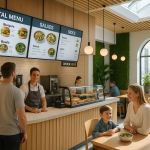
Self-service kiosks have long been a curiosity. Today, they are a key element of both the modern convenience store and the fast food industry: they speed up service, reduce errors, and free up staff for what they are indispensable for – quality, human interaction.
This article shows how to make the kiosk a true point of sale and not just a “touch-screen terminal”.

The kiosk does not send people “away”. On the contrary, it gives the operations team time
Automation is supposed to take away the routine, not the smile.
SaMo Stand handles order taking, payments, coupons or loyalty IDs; the team is dedicated to quality, speed and care:
– Fast food & bistro: kiosk handles multiple orders at once; staff focus on dispensing, food temperature and pace of service.
– Retail: instead of standing at the register, staff are “on the floor” – advising, dealing with substitutions, recommending products.
In short: the kiosk does the routine, the people do the experience. That’s how you build loyalty and create a positive customer experience.
What a good kiosk looks like in practice (with SaMo Stand)
– Clear introduction: large buttons (Food/”Menu”, Drinks, Promotions, Pick up order).
– Quick select + upsell: after selecting the main item, it will offer reasonable extras (drink, side dish, larger menu) – no pressure.
–Chaos-free exceptions: i see “no pickles, + cheese” right next to the item and in the cart.
– Payment and confirmation: easy payment
– Languages and availability: SK/CZ (or EN, DE…), large touchscreens, legible prices and allergens.

UX principles that reduce errors and increase sales
- Greeting & reassurance
Short “onboarding” (1-2 sentences), visible 1/3 step, back button always at hand. - Orientation without thinking
Clear categories, search, filters (vege, spicy, gluten-free). Basket always in sight. - Instant feedback
After tapping a gentle animation and confirmation sound, the added item will be recoloured in the basket. - Transparent pricing
Price on item, in cart and in summary; no “surprises” until checkout.
Kiosk as an extension of your brand (not just a cash register)
SaMo Stand we adapt to your identity: colours, typography, icons, microtexts (tone of voice), seasonal themes.
In gastro it can be “juicy” visuals and clear combo offers; in retail it can be an “endless aisle” with the availability of variants.
– Microcopes: “Anything else to go with the burger?” works better than “Add-ons”.
– Animations in moderation: highlight important moments (adding to cart, confirming payment).
– Consistency: what I see on WVsign screens, I can find in the kiosk – no inconsistencies in price or availability.

KPIs to track (and why)
It’s not just about the number of transactions. What matters is how the customer has gone through the journey:
– Task Completion Rate (TCR): the proportion of people who complete an order/operation.
– Error & Abandonment Rate: where people make mistakes and where they leave.
– AOV & Upsell Rate: the average bill value and the proportion of orders with a replenishment.
–Time to Checkout: speed from first touch to checkout.
– CSAT/NPS: short post-transaction review (optional, 2-3 taps).
– Repeat Usage: repeat purchases (from loyalty data or order-ahead).
Segmentation is key: half of users want speed (“sprinters”), the other half want discovery (“explorers”).
Optimize separate flows and A/B test – ranking, price size, photo vs. illustration, wording of buttons.
Implementation plan (30 days to pilot)
- Workshop (90 min) – objectives (AOV, speed, complaints), guest flow mapping.
- UX design & branding – category structure, button texts, icons, language mutations (SK/CZ/EN).
- Pilot (2-3 weeks) – A/B test of order and visuals, tweaking of texts and supplements.
- Evaluation & roll-out – adjustments according to data, scaling to other branches.
The most common mistakes (and how to avoid them)
– Cluttered content → 1 screen = 1 main task.
– Inconsistent pricing → inconsistencies arise without control.
– Long forms → shorten steps, leave advanced options
– No measurement → without KPIs, it’s hard to decide what to improve.
Summary
TheSaMo Stand self-service kiosk doesn’t shorten humanity – it just shortens the path to it.
When the kiosk handles the routine and the staff gives the experience “soul,” it creates an environment that customers love to return to.
By deploying SaMo Stand s WVsign (digital menu boards, promo panels, dispensing screens) you build a consistent point of sale ecosystem that is fast, accurate and branded as “yours”.