
The Role of Digital Signage in the Hospitality Industry – Enhancing the Guest Experience
Digital signage in the hospitality industry is changing the way hotels, bed-and-breakfasts, and other lodging facilities communicate with their guests. Digital screens provide a modern look, help guests find their way around more quickly, and deliver up-to-date guest information at the right time and in the right place. More than 60 percent of hotels in Europe use digital information systems to communicate more effectively with guests.
For hotel management and staff, digital signage in the hospitality industry is a practical tool for streamlining day-to-day communication. Information can be updated without having to replace printed materials. This gives guests an overview of services, supports clearer communication, and helps them navigate the building and find current events. The system also fosters a more personalized experience, as content can be tailored to the type of guests, their language preferences, and the specific location.
What Is Digital Signage in the Hospitality Industry?
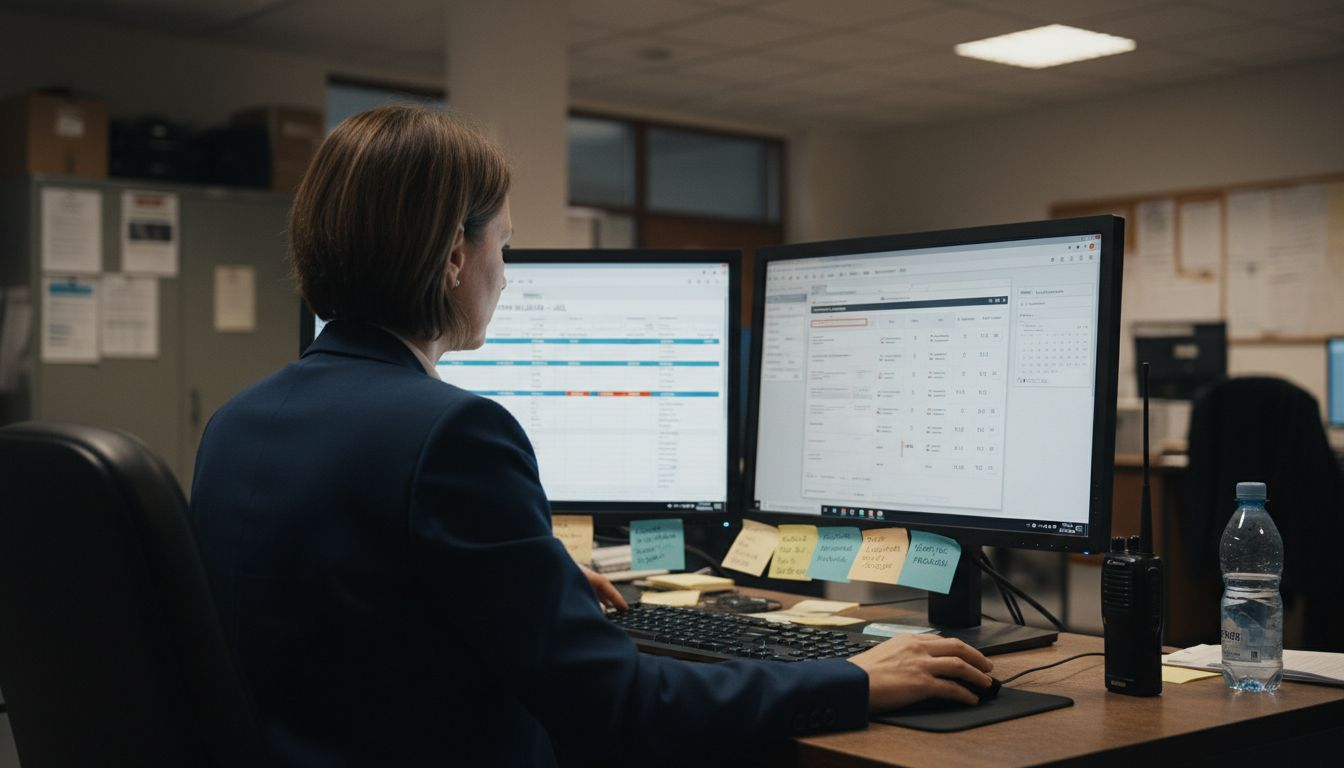
Digital signage is a communication system based on digital screens and information displays. It allows for the dynamic display of multimedia content in real time. In a hospitality setting, this can include welcome messages, navigation instructions, information about rooms and services, promotional announcements, and interactive interfaces.
Unlike static signs, digital content can be updated quickly and centrally. Hotel staff can respond to guests’ current needs, changes in the schedule, or the availability of services. This solution is suitable for both smaller accommodations and larger hotels with multiple common areas.
Practical applications include, in particular:
- dynamic display of information about rooms and hotel services,
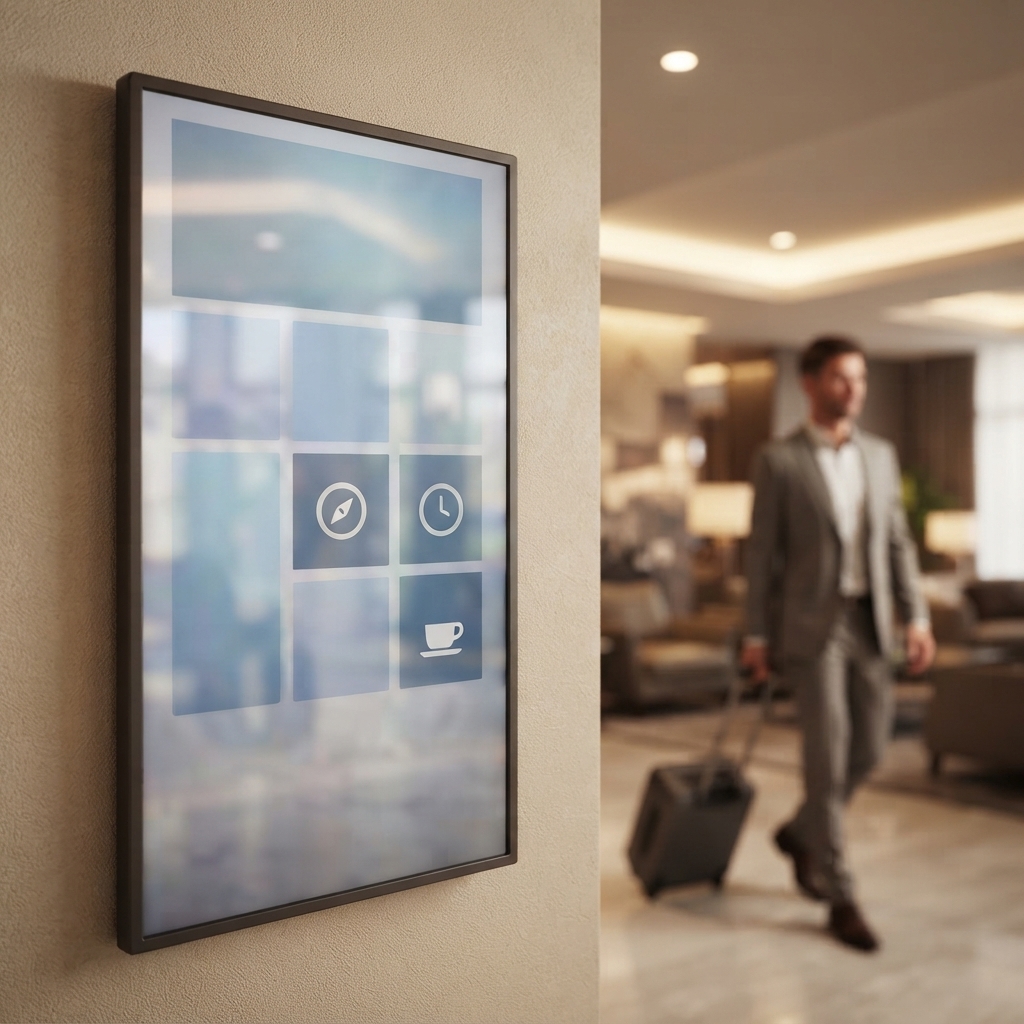
- interactive navigation in the lobby, hallways, and other common areas,
- prompt updates on current offers and events,
- a presentation of local tourist attractions,
- Welcome and orientation messages for guests.
The content can be tailored to visitors’ language preferences. This allows the hotel to create a more understandable and inclusive environment where guests can find their way around more easily as soon as they arrive.
Device Types and Deployment Options
Digital signage in the hospitality industry can utilize a variety of devices. The choice of devices depends on their location, purpose, and the method of communication with guests. Screens can be found at the front desk, in guest rooms, hallways, restaurants, or public areas.
- The displays in the lobby or at the front desk are used to welcome guests and display introductory information.
- Information kiosks in public spaces provide interactive touchscreen services and self-service information.
- In-room television systems display personal messages, hotel services, and relevant offers directly in the guest rooms.
- Navigation displays in the hallways and near the stairwells help guests find their rooms, the restaurant, conference rooms, or other areas of the hotel.
- Advertising screens at the entrance to restaurants or other establishments display available offers and current announcements.
Centralized management allows you to update content on multiple screens at once. This means staff do not have to adjust individual devices separately. At the same time, the modular solution allows for the gradual expansion of the system to meet the changing needs of the accommodation facility.
When planning the layout, it is important to consider visibility, screen height, ambient lighting, and the natural movement of guests. Each display should provide clear information without unnecessary clutter. Proper placement aids orientation and enhances the usability of the entire system.
Content Management and Design Customization
{“replacement”:”
Successful digital signage in the hospitality industry depends on more than just high-quality equipment. The content, its structure, and the way it is presented are equally important. Modern platforms allow you to centrally manage multimedia content, update guest information in real time, and create different versions tailored to a specific space or group of guests.
The hotel can customize the appearance of the screens to match its corporate identity. It is important to maintain consistent visual elements, legible fonts, and a logical layout of information. The design should help viewers quickly understand the content, support wayfinding, and avoid distracting them from the main message.
- Centralized management of screens and multimedia content,
- prompt updates on important guest information,
- customizing the design to match the company’s brand identity,
- integration of dynamic data sources,
- development of interactive presentation interfaces.
The content should be concise, clear, and tailored to the situation in which the guest is viewing it. Different types of announcements belong at the front desk, in guest rooms, or in the hallway. Regular testing helps identify unclear layouts, overly long texts, or inappropriate display frequencies, keeping digital signage in accommodations useful and easy to follow.
“}
Digitálna komunik.

Dotyková obrazovka
Benefits for Hotels and Guests
Digital signage in the hospitality industry improves the flow of information between the hotel and its guests. Guests can access the information they need without having to seek out staff or sift through multiple informational materials. Clear navigation instructions reduce the time it takes to find their way around and decrease the number of repeat questions at the front desk.